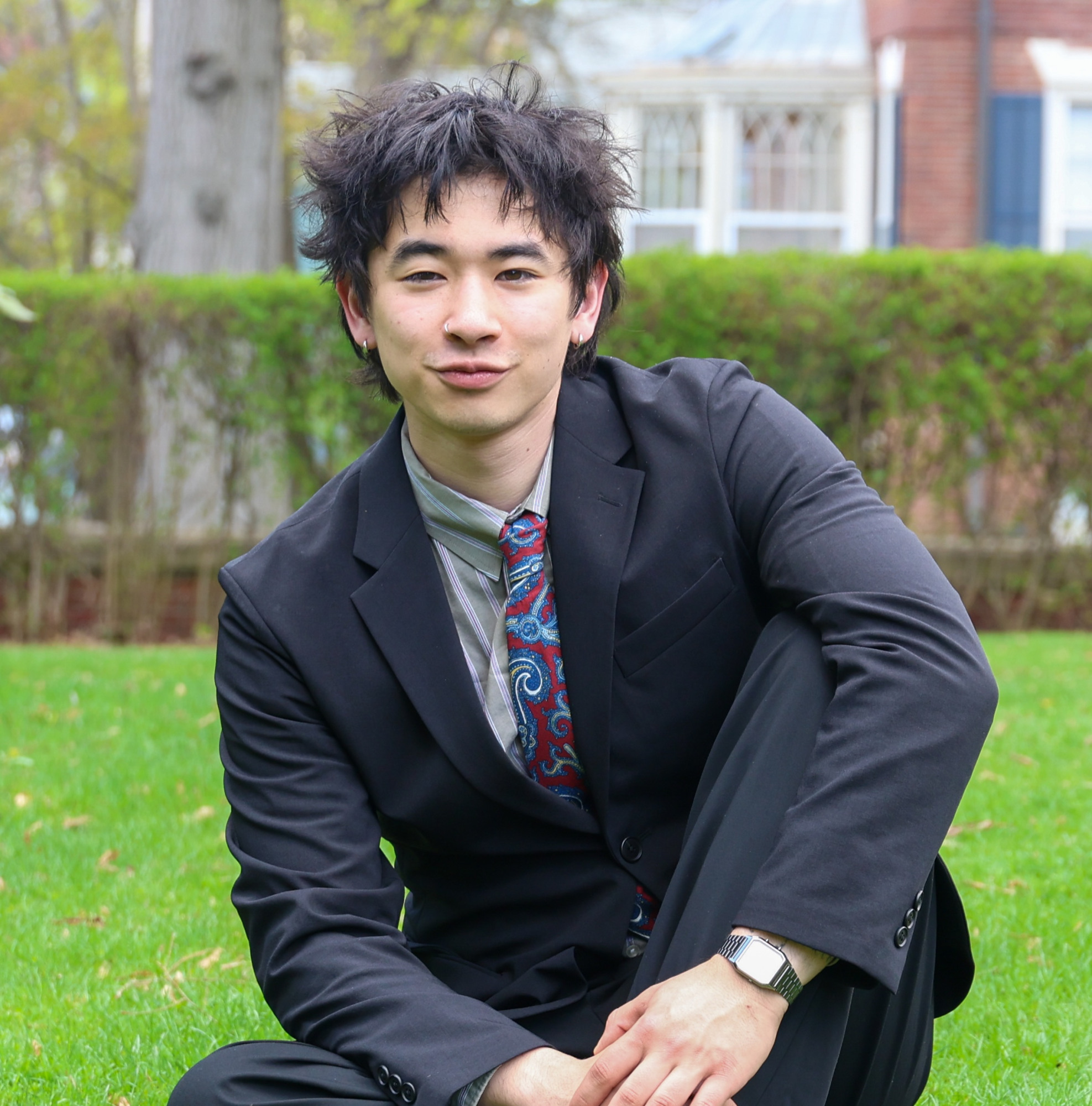
Student: Dylan Heinstein
Concentration: Neuroscience and Music
Faculty mentor: Sonia Mayoral
Lab: Mayoral lab
Thesis: For my honors thesis, I investigated how a process called PDGFRα signaling regulates the development of cells called oligodendrocytes. These cells produce myelin, the insulating sheath that allows neurons to communicate efficiently, and are a major target in treating multiple sclerosis, a disease in which the immune system attacks myelin. Using immunohistochemistry and fluorescence imaging, I examined how disrupting this PDGFRα signaling process in a rodent model affected developing oligodendrocytes across brain regions. I presented this work at the NEURON Conference at Quinnipiac University, where it received a poster award. By improving our understanding of myelin formation and repair, I hope my findings can help inform treatments for multiple sclerosis and other diseases of the central nervous system.
Why I ❤️ the Open Curriculum: I was able to double concentrate in Neuroscience and Music. Alongside my neuroscience coursework and lab research, I completed a music capstone project where I turned live recordings of brainwave data into songs. It was an incredible opportunity where I was able to leverage my knowledge as a neuroscience student to create an artistic, sonic experience. This freedom to explore brain science through biology, computation, music and performance has shaped the way I think about neuroscience as both a scientific and creative field.
What’s next? I’m excited to return to the Bay Area and pursue a career in biotech. My time at Brown taught me how to move between detailed experimental work and broader questions about how brain science can eventually improve human health, and I am especially interested in the fields of brain-computer interfaces, neuroinflammation and longevity. I hope to apply the research skills, scientific curiosity and interdisciplinary perspective I’ve developed to translational work, where discoveries about the brain have a pipeline to move closer to real-world applications.