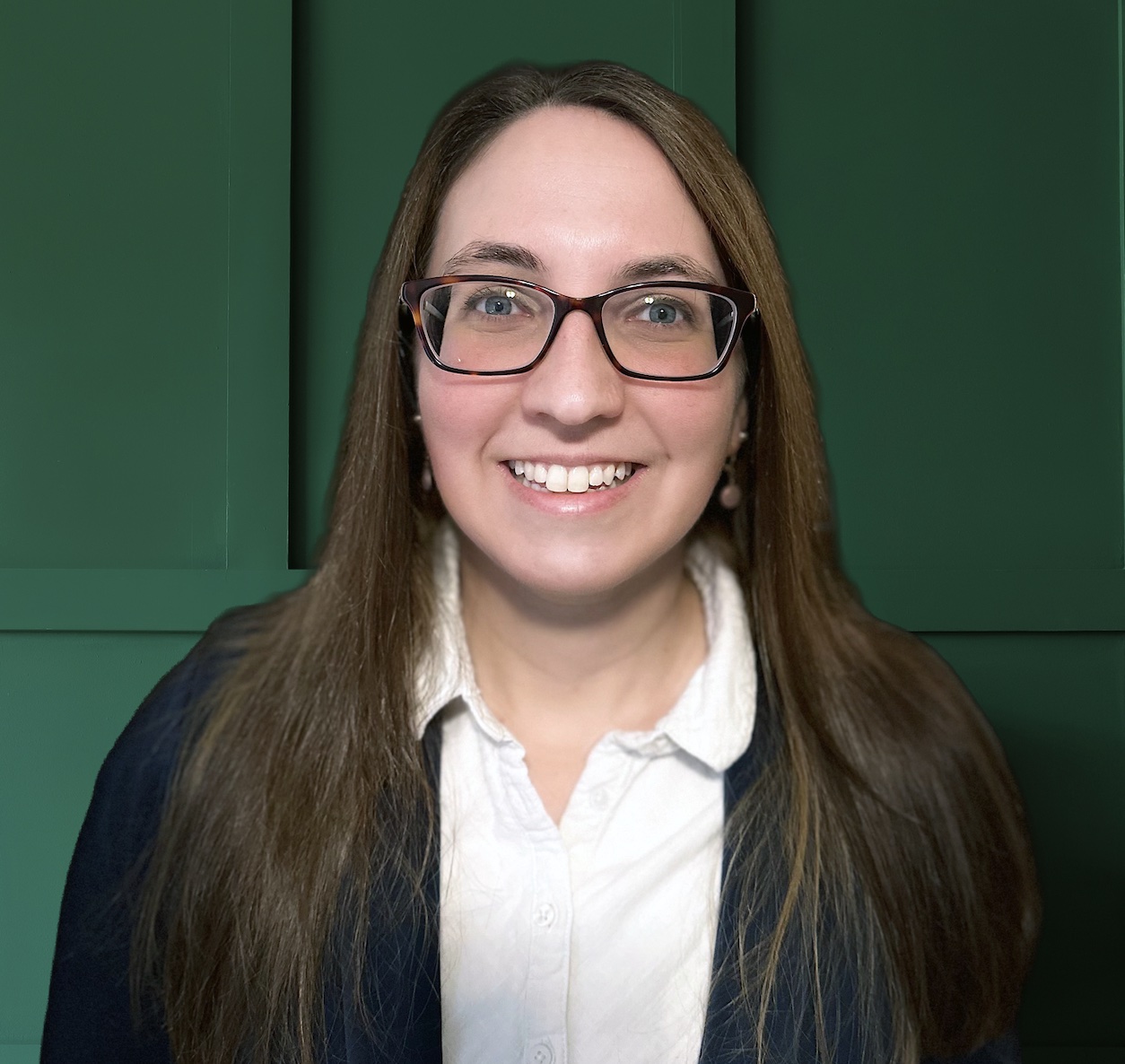
In late 2021, psychologist Chelsie Benca-Bachman was at a crossroads. Newly relocated during the pandemic for a postdoctoral position at Brown, she was also a new mother – and questioning her one-time goal of becoming faculty. She loved immersing herself in data and discovering surprising answers within it, but managing a lab and teaching courses would demand more of her time.
With the support of her mentor John McGeary, a professor of psychiatry and human behavior at Brown and the Providence VA Medical Center, she discovered a lifeline in Carney’s Advancing Research Careers (ARC) program, which supports Brown brain science postdocs with research funding and professional development.
Benca-Bachman had long been interested in co-occurring mental health disorders, a factor that makes treatment more complex. For the past seven years, she’d been approaching her questions via big data: statistical information drawn from medical records, for example, or previously conducted large-scale studies. But in order to help improve patient outcomes, she believed these findings needed to be balanced with smaller, more deeply characterized studies.
Inspired by the ARC program, she pitched a study, focusing on veterans struggling with overlapping symptoms of PTSD and poor sleep. Existing PTSD research turned up contradictions: Patients rated their sleep as poor, but “gold standard” objective measures, such as in-lab polysomnography (which monitors factors such as brain waves, heart rate, and breathing), indicated their sleep was relatively normal. Benca-Bachman wanted to conduct an in-lab study that would assess less traditional aspects of sleep. In particular, she had read about “the first night effect,” a common experience of not sleeping well the first night in a new place, and was curious if studying this phenomenon in veterans could turn up novel insights.
But first, she needed to find out whether her study design could work: Would veterans struggling with PTSD and sleep be able to nap in a sleep study setting? “It was very much an open question,” said Benca-Bachman.
Through ARC, she secured funding to run a pilot study with five veterans over four sleep sessions. Her pilot study revealed that the participants were able to sleep in the study setting, paving the way for her next steps in research.
The pilot study was successful in another way.
“Running the study gave me the confidence that I can add primary data collection to my portfolio of research,” said Benca-Bachman. “Getting to work hands-on with study participants rekindled my passion.”
The ARC program also provided an opportunity for Benca-Bachman to expand her local support network, including Jason Ritt, Carney’s scientific director of quantitative neuroscience, and Carney affiliate and sleep expert Mary Carskadon. Further, a series of ARC guest talks and events highlighted for her that there are more career paths in academia than she’d pictured, including research faculty positions where the research is still center stage, and it’s not necessary to manage a lab or teach.
Benca-Bachman is now a research professor at Brown and a research affiliate of the VA. She is currently applying for funding to conduct a larger PTSD/sleep study based on her preliminary findings that the “first night effect” for veterans may continue indefinitely. (This makes sense, Benca-Bachman says, since soldiers are trained to wake up at a moment’s notice.)
She also believes there are other groups who could benefit from this work. One in particular?
“Parents of newborns,” she said.
FUNDING INFORMATION: The VA’s Center for Neurorestoration and Neurotechnology partnered with ARC to support Benca-Bachman’s study proposal. The ARC grant covered Benca-Bachman’s travel funds and scientific training funds.