 Several new companies are emerging from Brown labs, each bringing something fresh to the fight against Alzheimer’s disease and other disorders.
Bess Frost, who directs Brown’s Center for Alzheimer’s Disease Research, sees significant advantages to starting a company to advance a discovery.
“Venture capitalists can more nimbly fund the clinical trials needed to test potential therapeutic developments," said Frost. "It’s the growing reality of how clinical trials are run in the U.S., and how drugs are made.”
Notably, these hopeful spin-offs are co-led by the trainees who made the discovery or developed the tech. Here, they share more about their entrepreneurial journeys.
___________________________________________________________
Company: Elephant Therapeutics
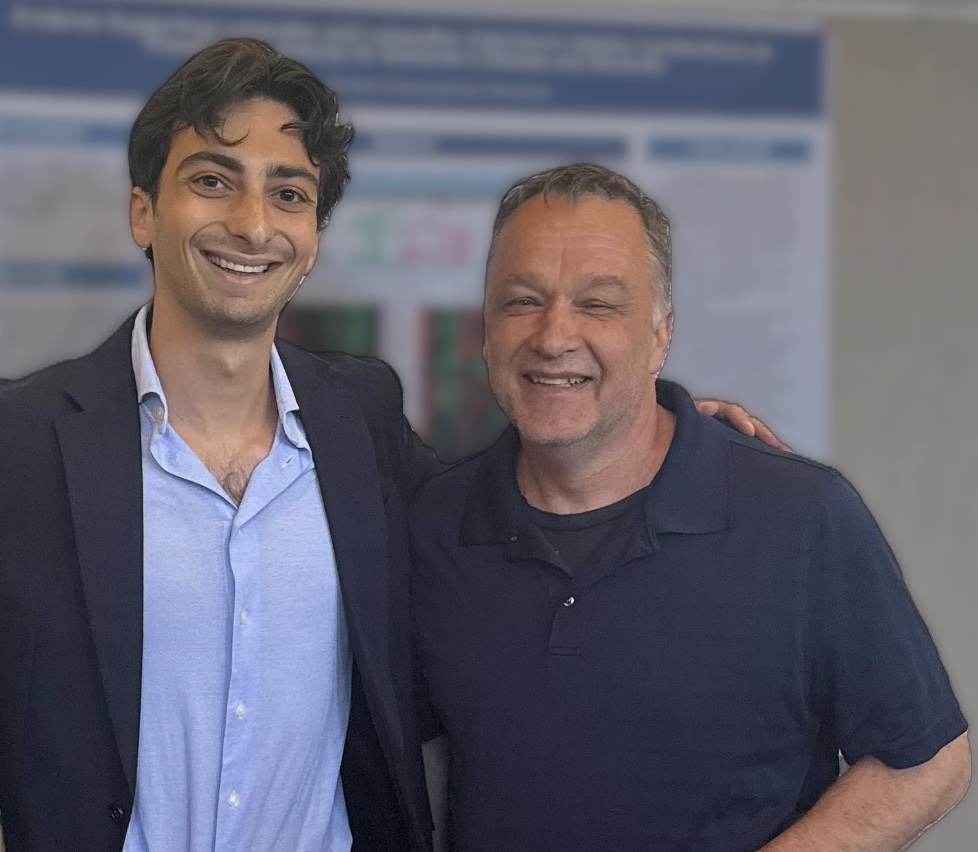
Founders: Larry Heller ‘25 and Robbert Creton, Professor of Medical Science, Pathology and Laboratory Medicine
Origin story: Heller joined the Creton lab as an undergraduate, intrigued by a technology Creton developed called Z-LaP Tracker, which screens drugs. Using the tool, Creton identified an FDA approved drug that had gone underused due to negative side effects and found that it could be relevant for Alzheimer’s disease. Heller then started combining other drugs with the first one, and found a combination that reduced side effects while also addressing multiple facets of Alzheimer’s pathology beyond plaques and tangles.
As Heller’s professors expressed excitement about the discovery, Heller–who is also passionate about economics and had all but signed on the dotted line to join a hedge fund–found himself at a crossroads.
“I became awed, almost, by the impact that people thought we could achieve with this combination therapy,” he said. “When my grandma was diagnosed with Alzheimer’s disease over the summer, that was a real sign that this is something I one hundred percent have to pursue.”
Stage of development: Elephant has filed one patent and one provisional (a less formal application that establishes a filing date, and gives an inventor 12 months to file a full patent) with Brown, and has closed an oversubscribed first round of seed funding. Additional studies are underway as Elephant seeks to advance its combination to clinical trials.
What’s in a name? Heller’s grandmother, who recently passed away, was named Ellie. Also, he says, “Elephants never forget.”
___________________________________________________________
Company: Acre Therapeutics
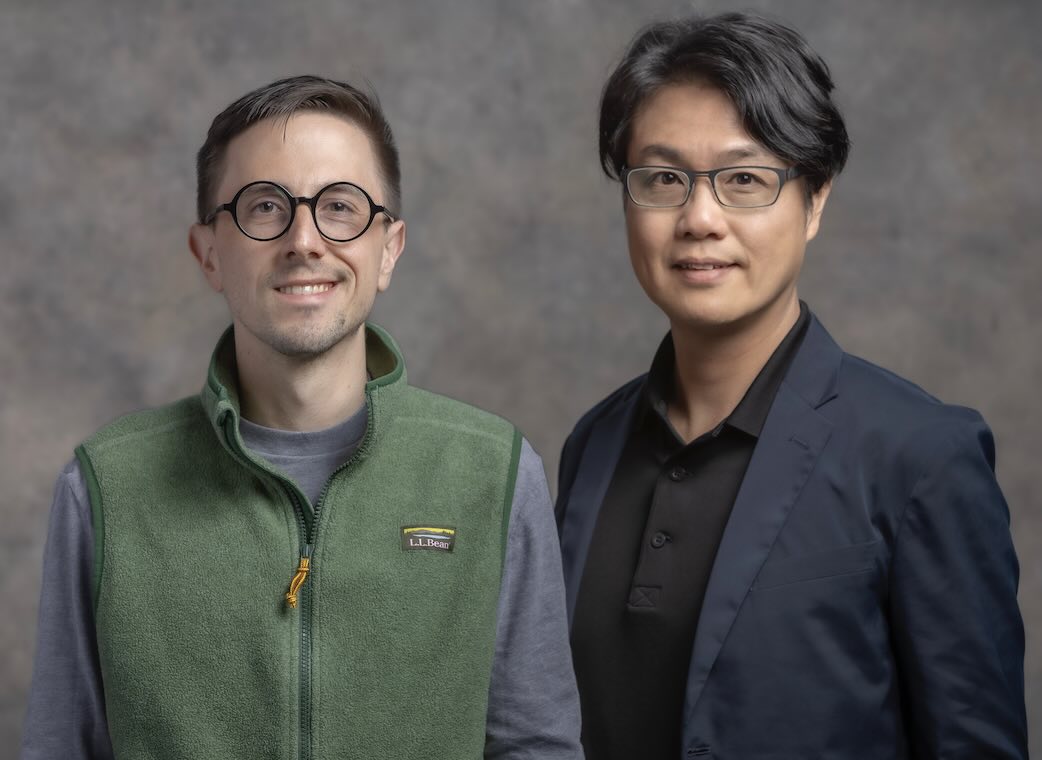
Founders: Ryan O’Rourke, current postdoc and Ph.D. ‘25, and Yu-Wen Alvin Huang, James and Dorothy Goodman Assistant Professor of Molecular Biology, Cell Biology and Biochemistry
Origin story: As a PhD student, Ryan O’Rourke joined the Huang lab, which translates insights about cellular mechanisms into targeted therapeutic strategies. O’Rourke’s thesis focused on BIN1, a protein that is one of the highest risk factors for developing late onset Alzheimer’s disease and increases the amount of abnormal tau protein that builds up in the brain. O’Rourke not only pinned down how BIN1 contributes to the spread of tau–by releasing it from within the cell and into extracellular vesicles–he also developed a molecule that modifies BIN1, preventing it from releasing as much tau.
O’Rourke, who completed Brown’s innovation management and entrepreneurship master’s program alongside his work in the lab, knows how many therapeutics fail in development. But, he says, “If that’s what’s going to happen, I would like to see that with my own eyes. I don’t want to leave something on the bench that could potentially help.”
Stage of development: Acre has filed a patent with Brown, is a recent winner of the 2025 NIA Start-up Challenge and Accelerator, and has received support from Brown’s Biomedical Innovations to Impact program. The company is in the process of further perfecting their molecule in human cell lines. From there, they will move into animal studies.
What’s in a name? Acre stands for “ATG8 conjugated release of exosomes.” It’s the cellular mechanism that O’Rourke discovered that lets BIN1 release tau outside the cell, and which his technology seeks to treat.
___________________________________________________________
Company: PyraSim
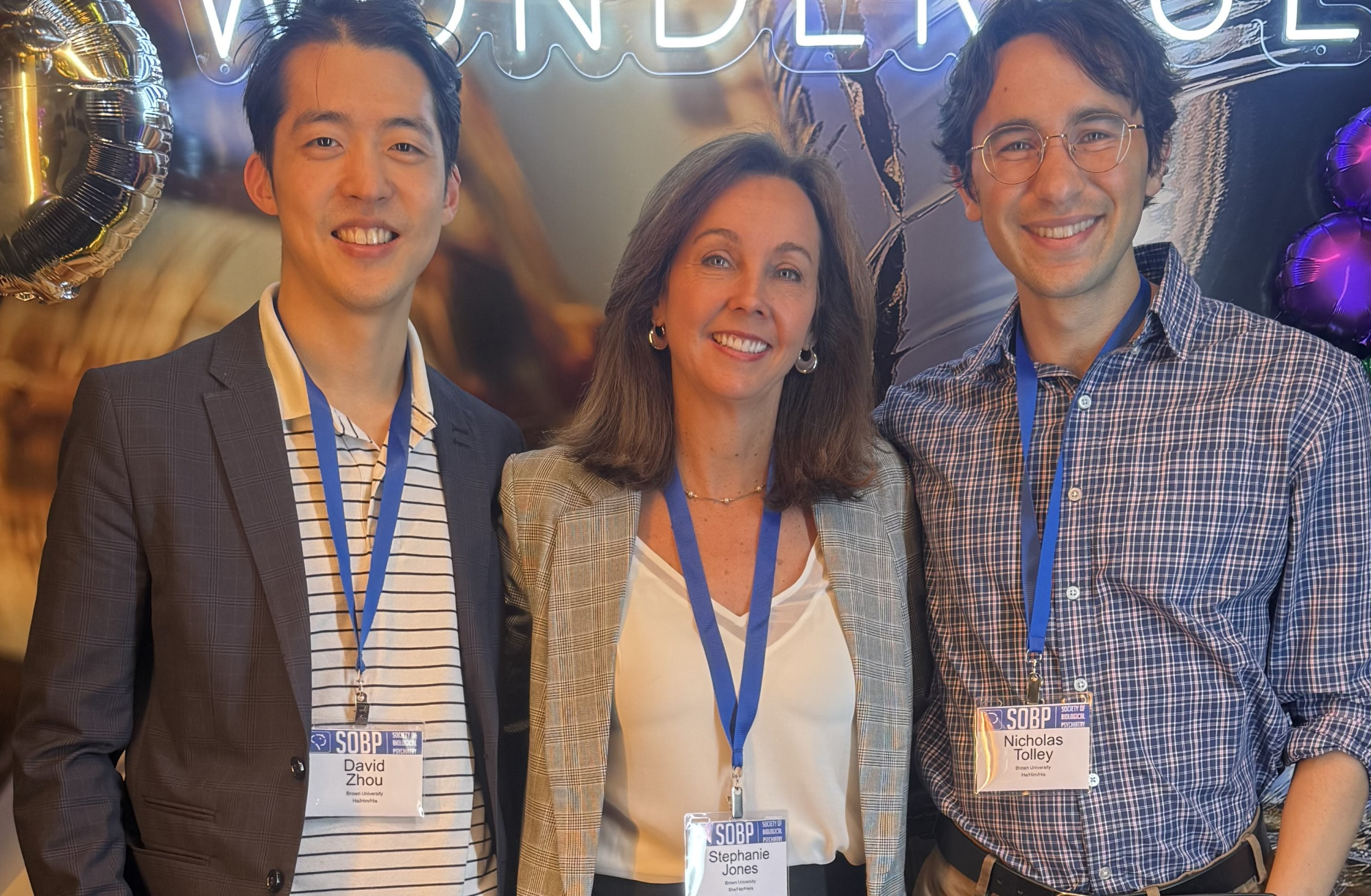
Founders: Nicholas Tolley, current postdoc and Ph.D. ‘25, David Zhou, current postdoc, and Stephanie R. Jones, Professor of Neuroscience
Origin story: Postdocs David Zhou and Nicholas Tolley were both drawn to the lab of Stephanie R. Jones by the technology she was advancing. Her methods can first pick important signals out of non-invasive recordings of brain activity (known as electroencephalograms, or EEG), and then generate a model of what the neurons that create those signals are doing. Such a model, or “digital twin,” presents the opportunity to both identify neural signatures of disease and to test out potential treatment.
In 2025, the lab–together with collaborators at the Complutense University of Madrid–used a component of this technology to identify neural activity indicating that a patient will develop Alzheimer’s disease within two and a half years. This success hints at the possibility of using PyraSim to stage Alzheimer’s disease much earlier than blood and PET imaging.
“There's a whole period of time before tau and amyloid biomarkers appear where early changes in brain circuitry are taking place–and that’s when an intervention might be able to slow or stop the disease,” said Zhou, who came to the Jones lab after a PhD at MIT. “This technology’s capacity to find objective biomarkers of direct, neural activity was why I wanted to join the lab.”
PyraSim’s Tolley, who never pictured himself as a founder and describes himself as “a nerd through and through,” said the entrepreneurial training he and Zhou received from incubator programs helped him realize that his academic interests held commercial potential.
“They made it very clear how what you might think is just a niche science project can actually, very quickly help people.”
Stage of development: PyraSim is in the company formation stage, has filed two patents and one provisional with Brown, and was a finalist in the 2024 MIT-Royalty Pharma Faculty Founder Initiative competition. It has also received support through Brown’s Biomedical Innovations to Impact program. Through the university, the team is currently negotiating research agreements with pharmaceutical companies.
What’s in a name? The type of neurons that EEG senses and records the activity of are called pyramidal neurons, hence “Pyra.” The Jones lab’s technology creates simulations, or digital twins, of a patient’s brain signaling, hence “Sim.”